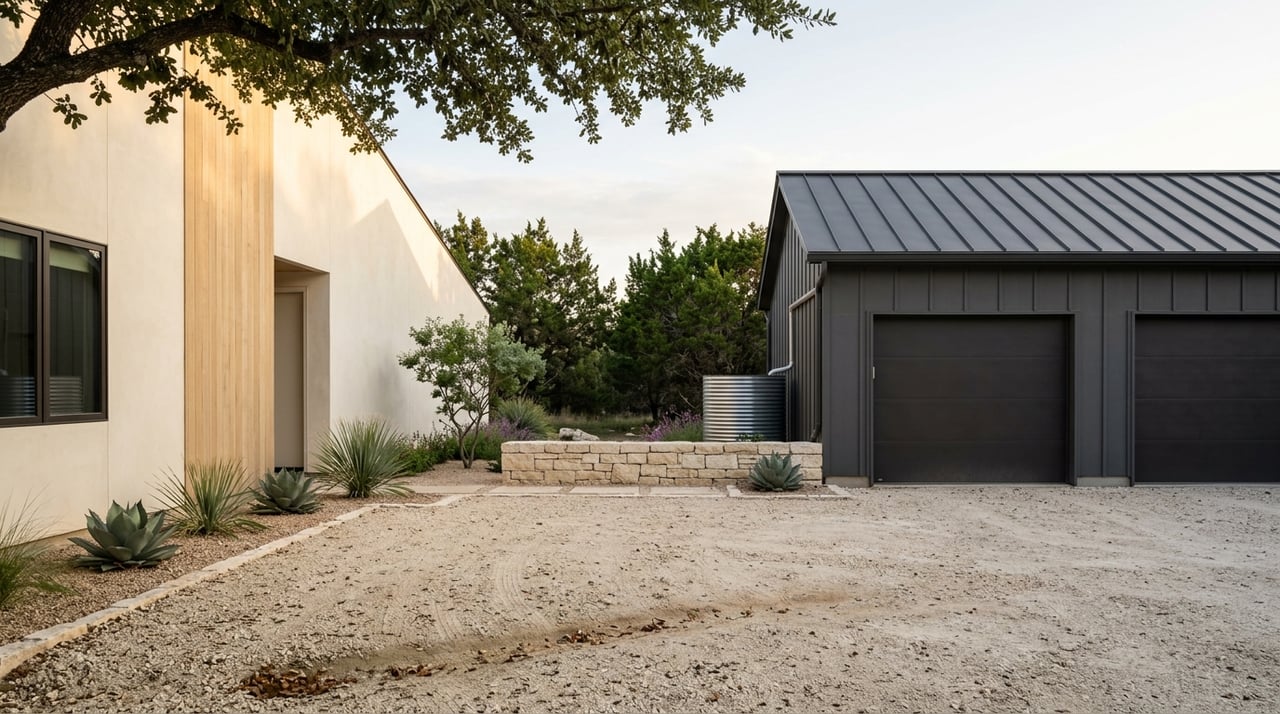
Buying acreage in Driftwood can feel like a dream come true, until you realize you are not just buying a house. You are also buying water, wastewater, access, drainage, and the day-to-day realities of managing land in Hays County. If you want to make a smart move and avoid expensive surprises, it helps to know what to verify before you fall in love with a property. Let’s dive in.
Driftwood is a census-designated place in Hays County, often described by local historical sources as a quiet Hill Country crossroads. That setting is a big part of the appeal if you want more space, more privacy, and a property that feels connected to the land.
At the same time, acreage in Driftwood is not one-size-fits-all. Public listing portals show everything from roughly 1-acre homesites to much larger tracts, with examples around 1.02, 5.67, 7.08, and 25 acres. That range means your search may include properties that feel almost neighborhood-like, along with much more rural options.
You may also see a wide mix of home styles and land features. Recent listings illustrate farmhouse, craftsman, ranch-style, and single-story homes, along with features like guest houses, horse stables, RV or boat parking, and oversized yards. In many cases, the real decision is not just about the home itself, but how the site is set up and what the land can support over time.
One of the first things to confirm is how the property is classified in Hays County. The county advises buyers and applicants to determine whether a tract is inside a city, inside a city’s extra-territorial jurisdiction, or in unincorporated Hays County. That matters because review processes and requirements can vary depending on location.
It is also important to know whether the property is in a platted subdivision or is considered raw land. Hays County notes that if the legal description includes words like subdivision, phase, section, block, or lot, it is probably platted. If the description uses survey and abstract language, that often points to raw land.
This may sound technical, but it affects what you can do with the property and what approvals may be needed later. If you think you may want to add structures or improve the site in the future, this is worth clarifying early.
When you buy acreage, utilities often need more scrutiny than they would in a typical subdivision. Hays County specifically tells buyers and applicants to determine the source of water and wastewater early in the process. That should be part of your first round of due diligence, not something you save for the end.
If the property has a private well, do not assume the water quality has been regulated or recently tested. The Texas Water Development Board says Texas does not regulate the water quality of private water wells, and the owner is responsible for any problems.
That is why the well report matters. TWDB recommends asking for a copy of the well report when buying property with a well, along with guidance on testing the water. You should also ask about the age and depth of the well and request the most recent water test results.
In a region where water planning is a growing issue, this becomes even more important. Hays County’s 2026 water study was launched after years of growth, development pressure, and ongoing water challenges, especially in West Hays County. That does not mean every Driftwood property has a water issue, but it does mean you should verify the exact supply source and think about long-term reliability.
If the property uses an on-site sewage facility, often called an OSSF or septic system, make that a top priority in your review. Hays County requires a permit for every on-site sewage facility regardless of lot size, and it will not issue a permit for a tract that violates subdivision regulations.
System design depends on a site evaluation and soil conditions. TCEQ explains that many Texas soils do not handle conventional systems well, which is one reason some properties rely on aerobic systems instead.
Aerobic or advanced treatment systems can be more complex and may require more maintenance or licensed service. Hays County also notes that ongoing maintenance is required for aerobic or advanced treatment systems. For conventional septic tanks, TCEQ recommends pumping every three to five years.
Before you buy, ask for septic records, permit history, and any available county documentation. Hays County says OSSF documents can be requested through public information or open records, and its rules apply to new, replacement, and altered systems.
A beautiful tract can lose appeal quickly if access is unclear or more complicated than expected. Hays County says plats should show access and utility information, which makes recorded documents especially useful when you are evaluating acreage.
The county also notes that some developments create new roads, some private roads must meet county standards, and driveway permits may be required. Transportation, flood, and fire staff may all review parts of a project, depending on what is proposed.
For you as a buyer, that means asking basic but important questions. Who maintains the road or driveway? Is the access straightforward and documented? Are there county standards or permits that affect future improvements? Those answers can shape both your costs and your plans for the property.
Acreage buyers sometimes focus on views, tree cover, or usable yard space and overlook drainage. In Hays County, that can be risky. The county advises buyers and applicants to determine whether a property falls in environmentally sensitive areas such as the Edwards Aquifer recharge, contributing, or transition zones, or in a Priority Groundwater Management Area.
Flood review also deserves real attention. Hays County warns that flood risk can exist far from a visible waterway, and its current flood hazard data dates from the late 1970s through the late 1990s. In other words, a quick walk of the land is not enough to understand drainage or flood exposure.
The county also states that development inside or outside the floodplain requires a permit. If you are thinking ahead to a driveway, fill work, a pool, or another site change, flood and drainage review should be part of your buying decision from day one.
Owning land in Driftwood can be rewarding, but it usually comes with more self-managed maintenance than a standard subdivision property. That can include septic upkeep, well testing, brush management, drainage attention, and road or driveway maintenance.
Wildfire awareness is also part of the ownership picture in unincorporated Hays County. The county fire marshal serves unincorporated areas and maintains wildfire-preparedness resources, while county burn rules regulate outdoor burning and can prohibit it during burn bans.
That matters not just for current use, but for how you plan to maintain the property. If you expect to clear brush, manage vegetation, or do outdoor burning, you need to know the local rules and your responsibilities.
One common mistake acreage buyers make is assuming that because a property is rural, future projects will be simple. In Hays County, development is defined broadly enough that clearing, grading, a slab, a pool, or other land modification can trigger county review.
That is important if you are already thinking about adding a workshop, barn, driveway, pool, or other improvement later. What feels like a straightforward residential upgrade may still involve permits, standards, or professional review.
This is one reason acreage should be viewed as both a home purchase and a systems purchase. You are evaluating the structure, but you are also underwriting land use, access, water, wastewater, drainage, and the practical path for any future plans.
If you want a cleaner buying process, keep your due diligence focused on the biggest property-specific issues first.
Acreage purchases often need a broader review team than a typical home purchase. Based on the issues flagged by Hays County, TWDB, and TCEQ, it can be helpful to involve a surveyor, an OSSF professional, a well driller or water-testing lab, and the title company early.
If access, easements, or deed restrictions are unclear, an attorney may also be worth consulting. The goal is not to make the transaction feel complicated. It is to make sure you understand exactly what you are buying before you commit.
A Driftwood acreage purchase can be a strong lifestyle move and a meaningful long-term asset, but only if you go in with a clear plan. The best purchases happen when you look beyond finishes and square footage and evaluate the full property system.
That kind of due diligence protects more than your peace of mind. It also helps you make a smarter financial decision about maintenance, future improvements, and the long-term usability of the land.
If you are exploring acreage in Driftwood and want a grounded, strategic buying plan, Courtney Unangst can help you evaluate the property, the systems, and the bigger picture with clarity.
We pride ourselves in providing personalized solutions that bring our clients closer to their dream properties and enhance their long-term wealth. Contact us today to find out how we can be of assistance to you!