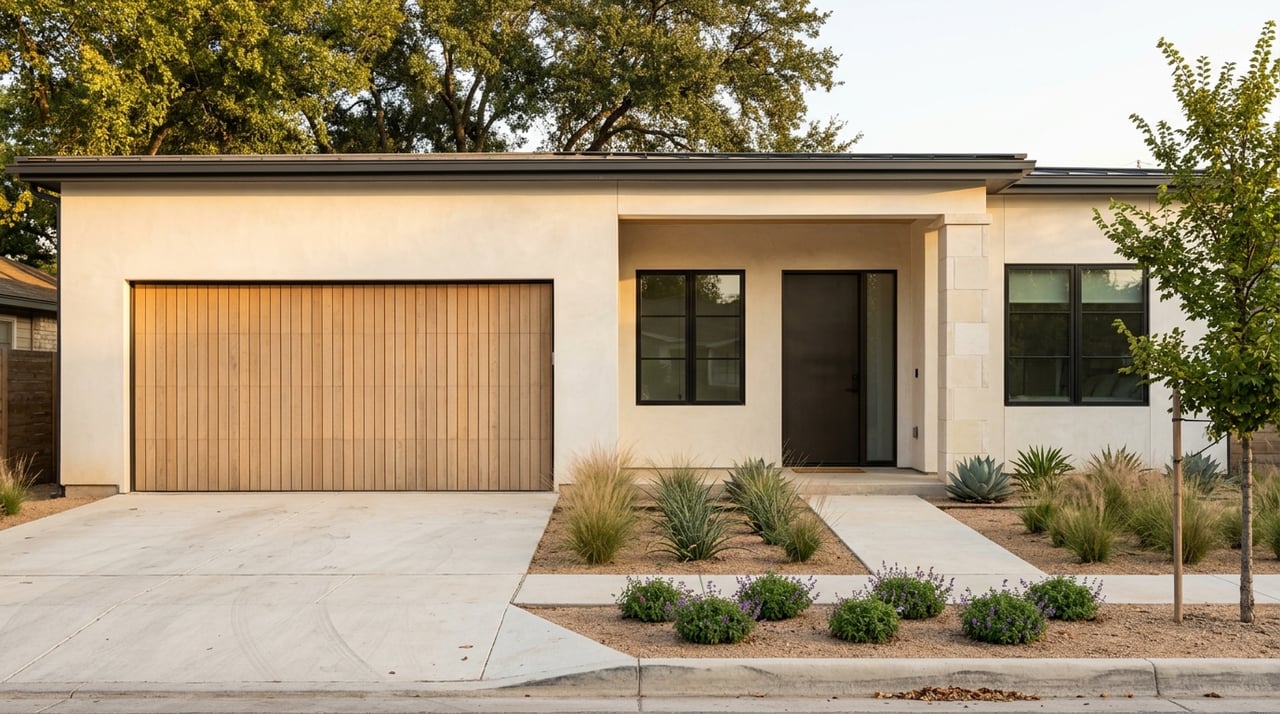
Wondering if Buda is the smart place to buy your first home? If you are weighing price, space, commute time, and long-term value, that question matters more than ever. The good news is that Buda offers a very specific kind of first-home opportunity, and understanding the trade-offs can help you buy with more confidence. Let’s dive in.
Buda tends to appeal to buyers who want a more suburban, homeowner-focused setting than Austin. Census data shows a 76.6% owner-occupied rate in Buda, which is much higher than Austin’s 43.4%. That can make Buda feel more centered on long-term homeownership than a denser urban market.
It also helps to know what kind of housing you will mostly find here. Buda’s 2024 comprehensive plan shows that 77.9% of the city’s housing is single-family, compared with 50.0% in Austin. If your first-home goal includes a detached house, yard space, or a neighborhood with newer subdivisions, Buda lines up well with that search.
At first glance, Buda can look expensive if you only look at long-run census values. The median owner-occupied home value is listed at $446,600. But that number reflects the value of homes people already own, not just what current buyers are shopping for today.
A more practical snapshot for active buyers comes from a March 2026 local market report. That report showed a median price of $324,999, with 26.7% of listings priced from $200,000 to $299,999 and 48.9% priced from $300,000 to $399,999. For many first-time buyers, that suggests the most realistic entry point is often in the high-$200,000s to high-$300,000s.
That range matters because it gives you a clearer target as you plan. Instead of assuming Buda is out of reach, you can focus on what is actually trading in the market now. In many cases, that makes Buda more approachable than buyers expect.
If you picture your first home as a standalone house, Buda offers a strong match. Current lower-price inventory shows that the under-$350,000 market is active, but it is made up mostly of detached homes rather than a large condo or townhouse supply. That fits Buda’s broader development pattern, especially east of I-35 where newer residential growth has continued.
Because Buda has a high owner-occupied rate, it often attracts buyers looking for stability and a place to stay for several years. If you are thinking about your purchase as both a home and a long-term financial step, that kind of market can feel more aligned with your goals.
Compared with Austin, Buda is somewhat less expensive on several ownership metrics that first-time buyers care about. Census figures show Buda’s median owner-occupied home value at $446,600 versus $555,300 in Austin. Median monthly owner costs with a mortgage are also lower in Buda at $2,240 compared with $2,679 in Austin.
That does not mean every home in Buda is affordable for every budget. It does mean the city may offer a more attainable path for buyers who want more space and can be flexible on commute time.
No first-home decision is just about price. In Buda, one of the biggest trade-offs is transportation.
Buda is about 15 miles southwest of downtown Austin, and the mean one-way commute for Buda workers is 29.0 minutes. Austin’s mean one-way commute is 23.7 minutes, so the difference is real before you even factor in day-to-day traffic.
I-35 is the main route between Buda and Austin, and TxDOT identifies the Austin I-35 corridor as one of the most congested roadway segments in Texas. That makes Buda a better fit if you are comfortable with a drive-first lifestyle. If you need a short commute or rely on a strong daily transit network, Buda may feel less convenient.
The city’s transit options are still limited for everyday commuter use. Public transportation information centers on event shuttles and STAR service for seniors and people with disabilities, while broader commuter service is still discussed more as a future option than an established one. In simple terms, most buyers in Buda should expect to drive.
Buda offers a different rhythm than Austin. If you want a more urban environment with dense housing and shorter access to downtown amenities, Austin may still be the better fit. If you want more of a small-town feel with parks and room to spread out, Buda has a strong case.
The city manages more than 260 acres of parkland and trails. City Park alone covers 59 acres and includes an amphitheater, playground, splash pad, and recurring events. Historic Stagecoach Park adds another 51 acres with nature trails, which reinforces Buda’s park-oriented character.
For many first-time buyers, lifestyle fit is just as important as price fit. A home can look good on paper, but the day-to-day experience matters. Buda tends to work best for buyers who value space, ownership, and a quieter setting more than a dense city feel.
Buying your first home is not only about finding the right listing. It is also about understanding the full cost of ownership so you can make a strong decision.
Home equity is the part of the home’s value that you own. It is the home’s value minus what you still owe on your mortgage. As you make mortgage payments, you build equity over time, although growth is typically slower in the early years because more of each payment goes toward interest at first.
If you are thinking long term, this matters. A first home is not only a place to live. It can also become part of your broader wealth-building plan over time.
Many first-time buyers focus heavily on the down payment and forget about closing costs. Closing costs are the fees required to finish the purchase and mortgage, and they typically run about 2% to 5% of the purchase price.
Using Buda’s March 2026 median price of $324,999 as a rough example, closing costs could land around $6,500 to $16,250 before your down payment. These costs can include appraisal fees, title insurance, taxes, homeowners insurance, and prepaid interest. In some cases, seller credits may help offset part of that total.
A smart first step is deciding what monthly payment feels sustainable for your life, not just what a lender may approve. That gives you a better foundation for your search and helps you avoid stretching too far.
Once you know your target, build your savings plan around three buckets:
That last category matters more than many buyers expect. Even a well-maintained home can come with early expenses once you move in.
Preapproval helps you understand what price range is realistic before you start touring homes. In a market where many listings fall into a fairly defined starter-home range, that clarity can save time and reduce stress.
For Texas buyers, the Texas Department of Housing and Community Affairs says the Texas Homebuyer Program includes My First Texas Home, which offers down payment assistance and 30-year low-interest mortgages for qualifying first-time buyers. Homebuyer education is required to qualify for assistance, so it is worth reviewing early in your planning process.
Buda could be the right place for your first home if you want a mostly detached-home market, a more owner-occupied environment, and a price point that may be more approachable than Austin. It is especially worth considering if you value space, parks, and a suburban feel.
Buda may be less compelling if your top priority is a shorter commute, less dependence on a car, or a denser urban lifestyle. The best choice comes down to how you balance budget, daily routine, and long-term goals.
A first home is one of your biggest financial decisions, so it helps to look beyond headlines and focus on how a market fits your real life. If you want a strategic plan for buying in Buda and the greater Austin area, Courtney Unangst can help you evaluate the numbers, the neighborhoods, and the next steps with clarity.
We pride ourselves in providing personalized solutions that bring our clients closer to their dream properties and enhance their long-term wealth. Contact us today to find out how we can be of assistance to you!